In 1870 Gaudi moved to Barcelona to study architecture. During his studies his professors noticed his talent and because of this they allowed him to collaborate with them on certain projects, which started to gain him a reputation.
By the time he completed his studies at the School of Architecture in 1878, Elies Rogent, the Director of the school, apparently said he wasn’t sure if he had awarded the degree to a madman or a genius, and only time would tell. It certainly did and it was very much the latter!
Gaudi went on to develop his unique style which was a blend of Gothic art & art nouveau with functional structure. He had a passion for colourful textures, which became prominent in his work along with other building techniques such as inclined columns, paraboloid arches and thin edged-butted tile vaults.
Gaudi was regularly commissioned by the wealthy and elite in Barcelona, one of which was Eusebio Güell Bacigalupi, who would grow to be one of Gaudi’s closest friends as well as a major client.
Gaudi built Palace Güell for him between 1885 & 1889, which is now a museum and has some of Gaudi’s favourite design features such as the parabolic arched entrances. Gaudi went on to develop Park Güell between 1900 and 1914 and even ended up living on site, in one of the two properties there until his death.
Other properties in and around Barcelona that Gaudi was responsible for include Casa Vicens which he constructed between 1878 – 1880. Casa Batlló which he constructed between 1905 – 1907 and Casa Milà - La Pedrera, which he built between 1905 & 1910.
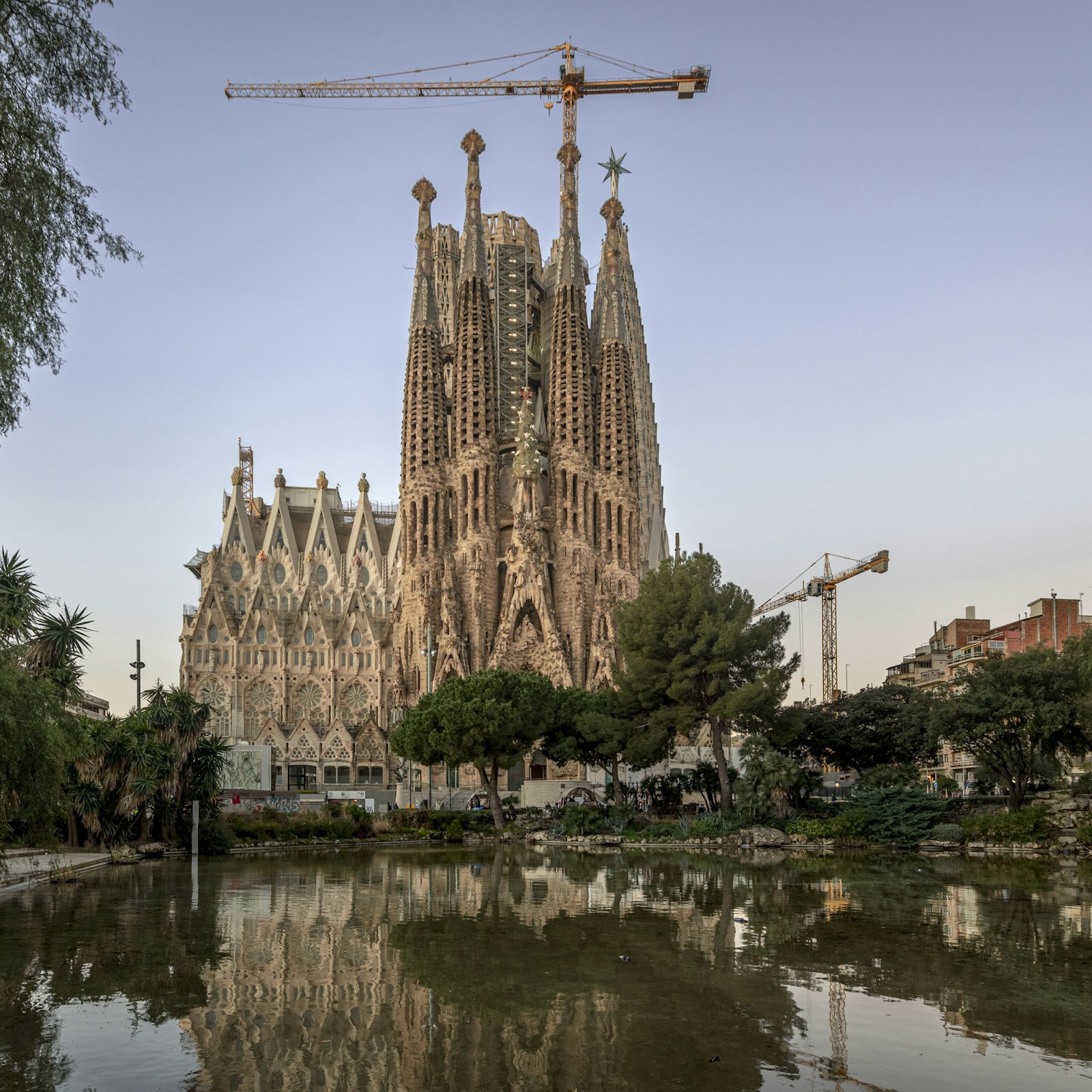
You’ve probably noticed we haven’t yet mentioned his most famous project of all yet, the Sagrada Familia, which takes its pride of place in Barcelona and is one of the most recognised buildings in the city and possibly the country. Gaudi took over the project in 1883 whilst still involved on other projects at the same time. He then spent the next 40 years obsessing over Sagrada Familia and helping to make it what it is today (albeit still unfinished!). In 1914 Gaudi decided to stop taking on other commissions so he could work solely on what had become his passion, the Sagrada Familia. Gaudi got to work on the project for another 12-years until 1 June 1926, when he was sadly was run over by a tram and he died from the injuries.
Antoni Gaudi is buried in the Sagrada Familia in the Our Lady of Carmel chapel in the Temple crypt.
The Sagrada Familia was due to be completed in 2026 but was delayed by Covid-19 and suggested slower funding and the current project Director hasn't given an updated completion date.
If you would like to visit the Sacrada Famllia or Gaudi's other properties in Barcelona, we have the following options:
Sagrada Familia Ticket Options