


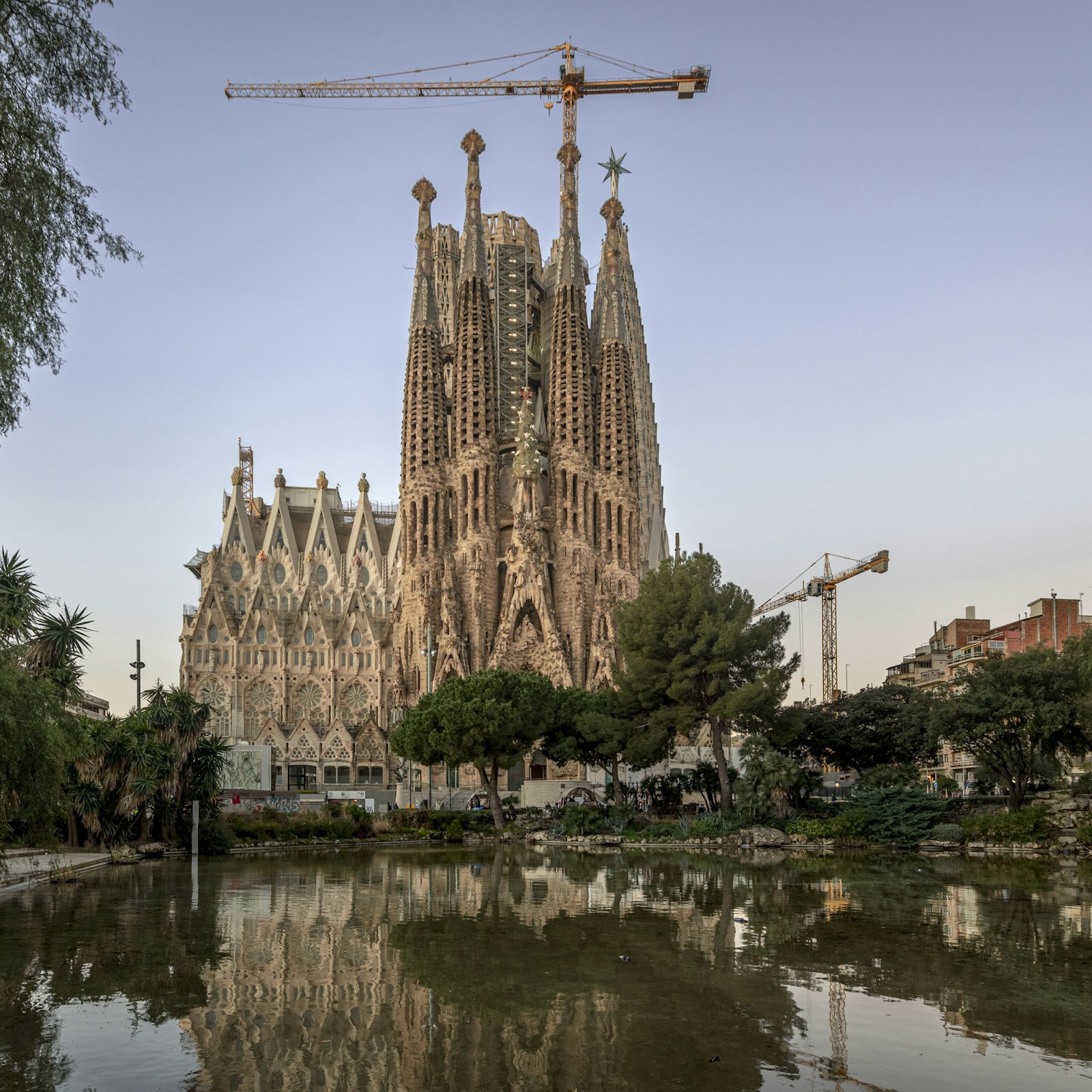


UNESCO World Heritage Tickets, Barcelona
More Tickets
Barcelona UNESCO World Heritage Tickets
More Tickets
Palau de la Música Catalana: Audio Guide Tour Tickets
- Instant Ticket Delivery
- Smartphone Tickets Accepted
- Wheelchair Accessible
- Audio Guide

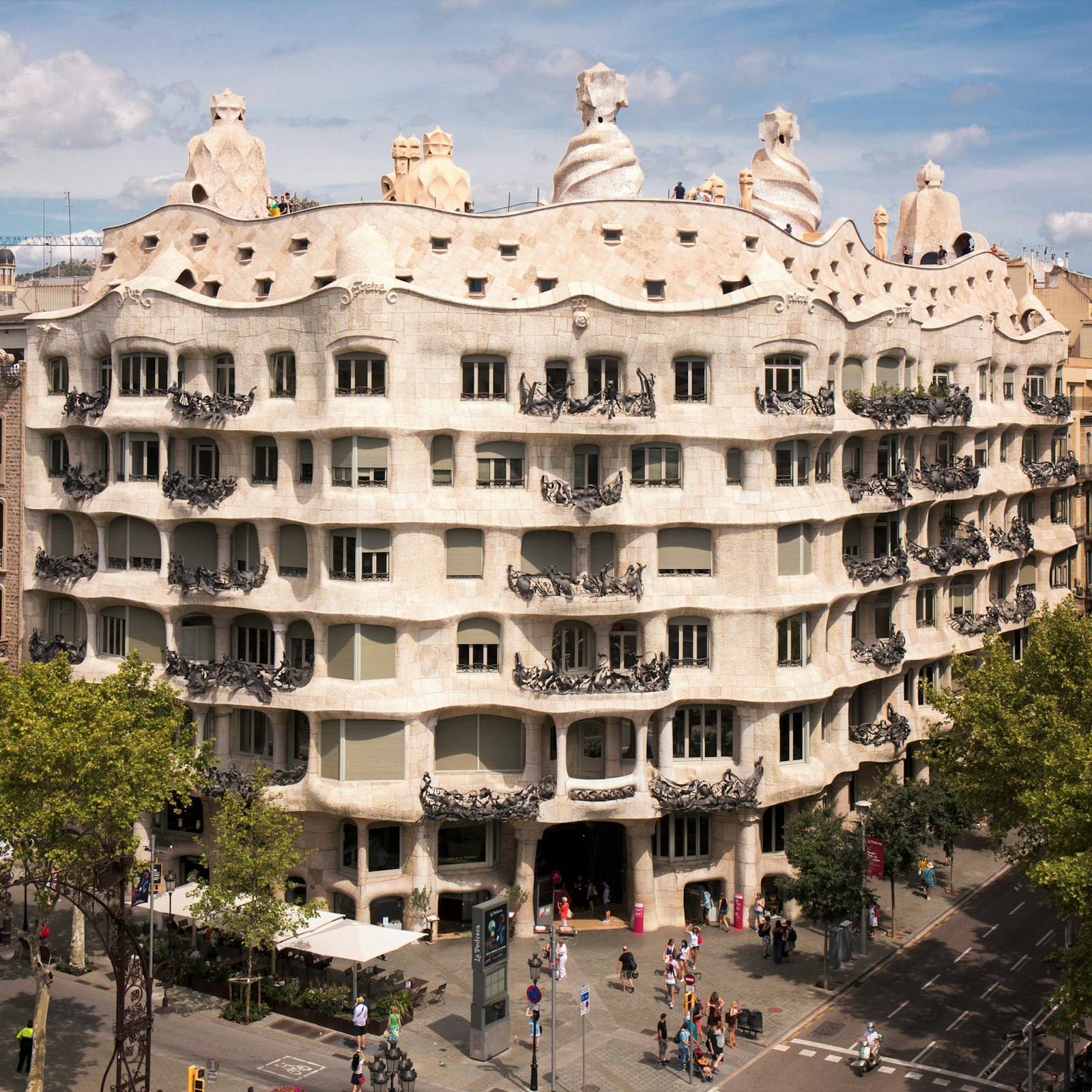
Casa Milà La Pedrera: Skip The Line Entry Ticket
- Instant Ticket Delivery
- Skip The Line Entry Ticket
- Audio Guide
- Smartphone Tickets Accepted

Sant Pau Art Nouveau Site: Skip The Line Entry Ticket
- Instant Ticket Delivery
- Skip The Line Ticket
- Wheelchair Accessible
- Smartphone Tickets Accepted
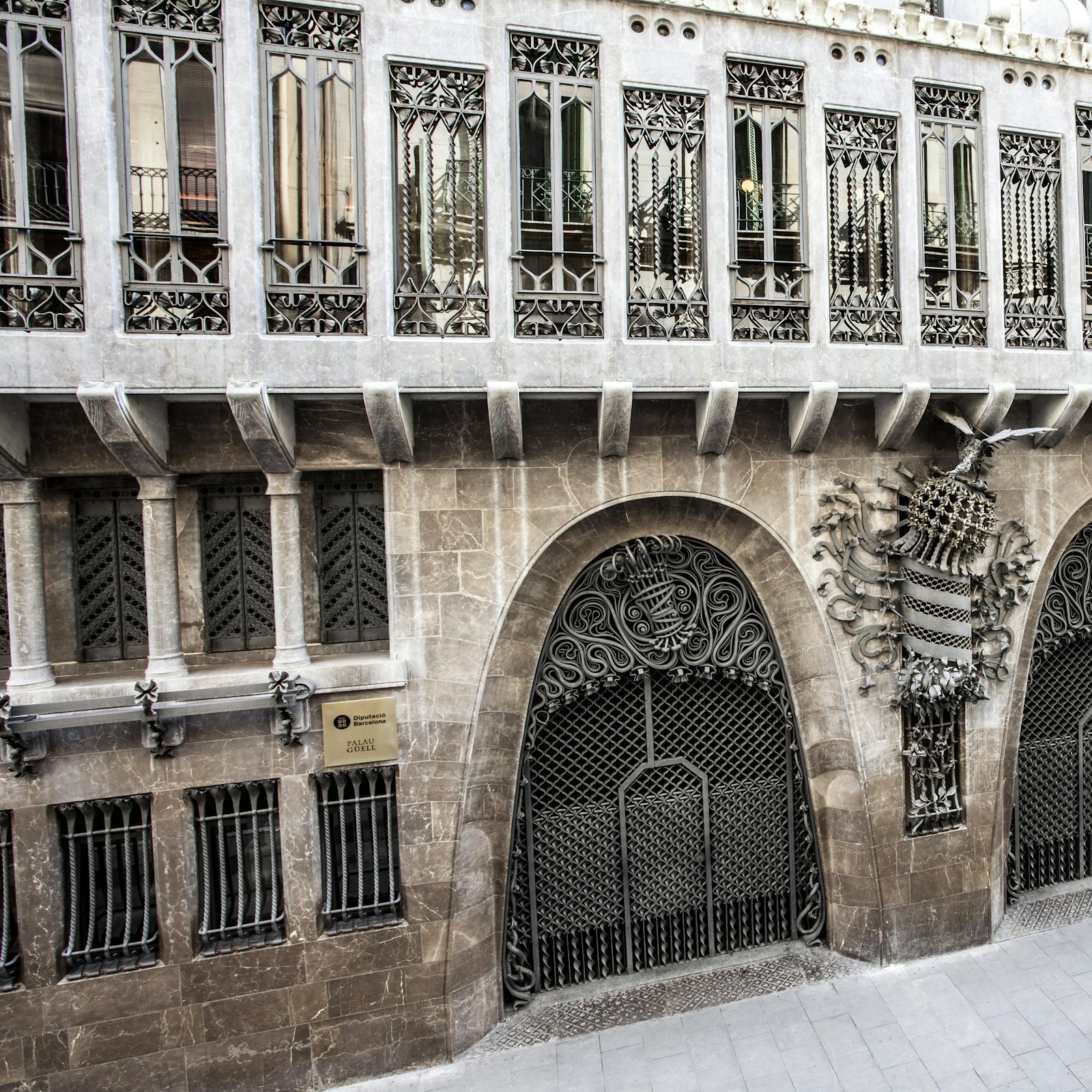
Palau Güell (Güell Palace): Skip The Line Ticket
- Instant Ticket Delivery
- Skip The Line
- Wheelchair Accessible
- Audio Guide (multiple languages)
- Smartphone Tickets Accepted

Casa Vicens: Skip The Line Ticket
- Instant Ticket Delivery
- Smartphone Tickets Accepted
- Skip The Line
- Audio Guide
- Wheelchair Accessible
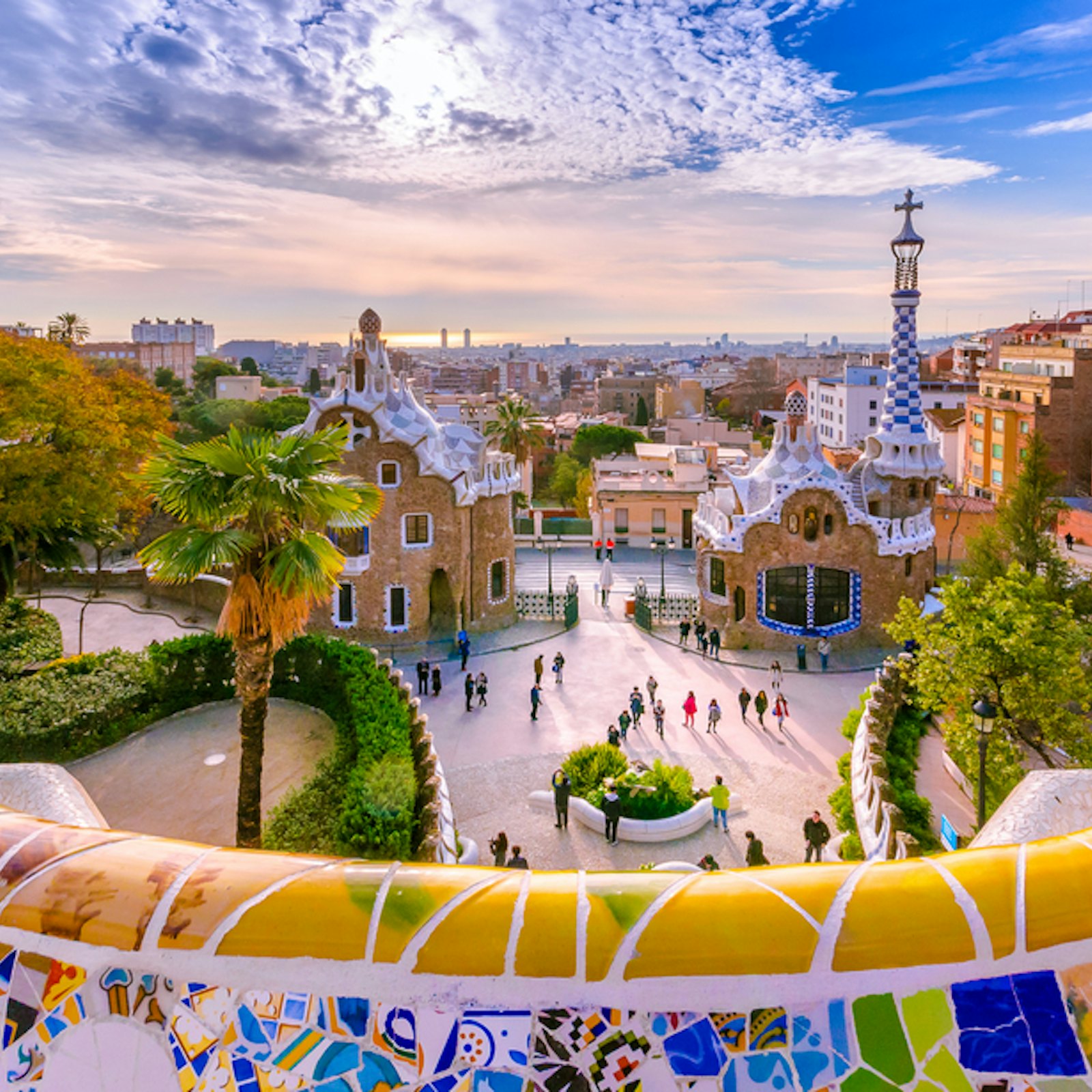
Park Güell: Entry Ticket
- Instant Ticket Delivery
- Fast Track Entry
- Smartphone Tickets Accepted
Barcelona UNESCO World Heritage Tickets
More Tickets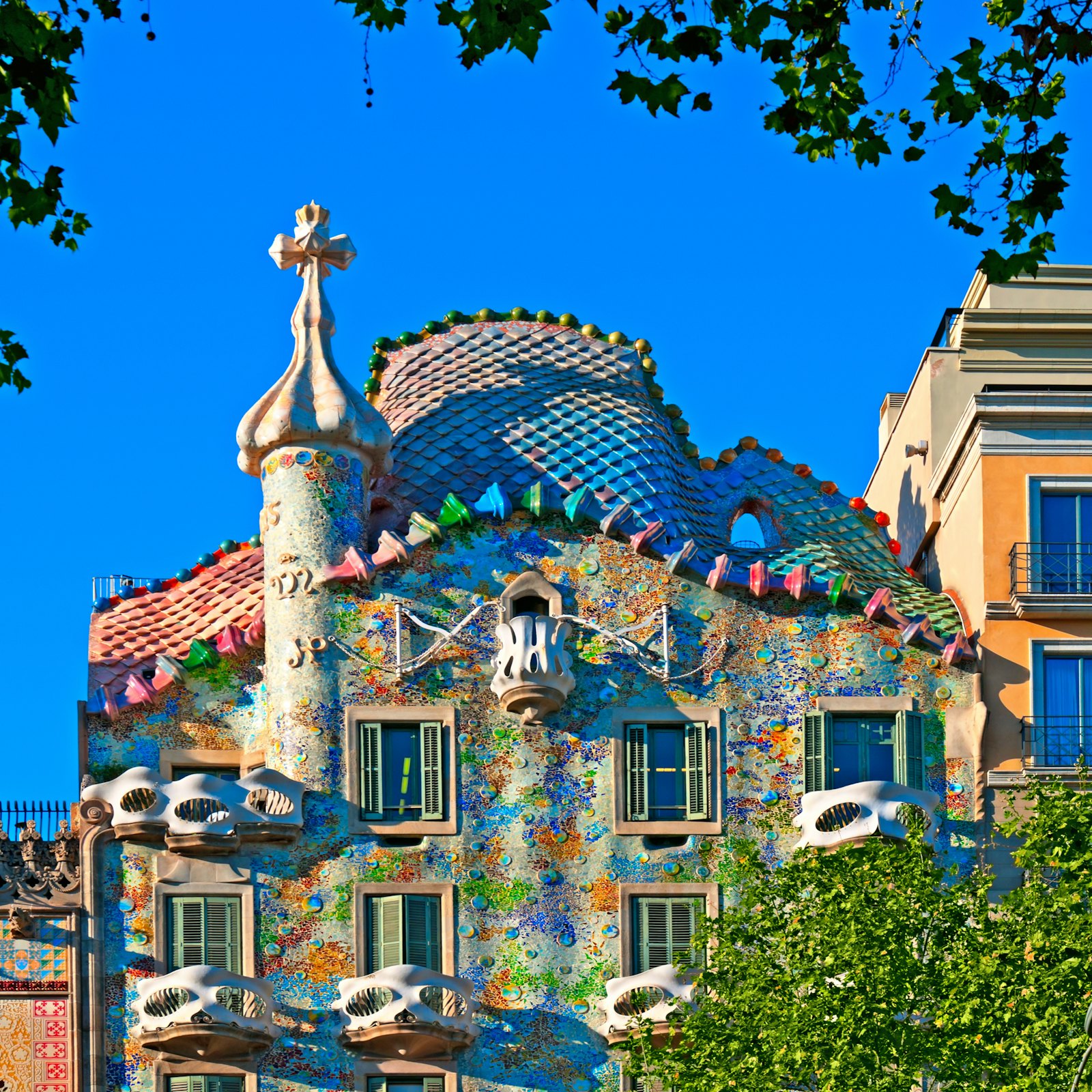
Barcelona UNESCO World Heritage Sites - Tickets and Visitor Information
Barcelona is home to nine UNESCO World Heritage sites or components. Seven of them form part of UNESCO's "Works of Antoni Gaudí" World Heritage property, while the other two were designed by Lluís Domènech i Montaner. Most are open to visitors and rank among the city's most popular attractions.
What are the UNESCO World Heritage Sites in Barcelona?
Works of Antoni Gaudí UNESCO Sites
- Sagrada Familia
- Park Güell
- Casa Batlló
- Casa Milà (La Pedrera)
- Casa Vicens
- Palau Güell
- Crypt of Colònia Güell (outside Barcelona)
What is the "Works of Antoni Gaudí" UNESCO World Heritage Site?
The "Works of Antoni Gaudí" is a UNESCO World Heritage property made up of seven buildings and architectural works by Antoni Gaudí in Barcelona and the surrounding area. The original listing was created in 1984 and included Park Güell, Palau Güell and Casa Milà - La Pedrera. It was then expanded in 2005 to include the Nativity façade and Crypt of the Sagrada Família, Casa Vicens, Casa Batlló and the Crypt of Colònia Güell.
Other UNESCO World Heritage Sites
Sagrada Familia Tickets
The Sagrada Familia is the most famous UNESCO site in Barcelona and it still isn't finished. It is also the city's most popular attraction. UNESCO added Gaudí's work on the Nativity façade and Crypt of the Sagrada Família to the "Works of Antoni Gaudí" World Heritage property in 2005.
The church was designed by Catalan architect Antoni Gaudí, who ended up dedicating the later part of his life to the project and stopped taking other commissions in order to solely concentrate on his crowning glory and passion project. He even turned a small section of his workshop at the Sagrada Familia into his living quarters and lived there for a period from 1925 until his death in 1926, when he was hit by a tram in Barcelona.
Its full title is the 'Basilica I Temple Expiatori de la Sagrada Familia' and around five million people pay to visit the inside of the basilica each year to see in person its architecture and features, including the stained glass windows.
Construction on the Sagrada Familia started in 1882 and it was expected to be completed in 2026, but due to COVID-19 and funding issues, its completion has been delayed. Its main tower, the Tower of Jesus Christ, saw its external completion in February 2026. This was a major milestone as the tower reaches 172.5 metres and is now the highest point of the basilica.
You can see the completed sections of the three facades (Nativity facade, Passion facade and Glory facade), the interior including the tree-like columns, the stained-glass windows, Gaudí’s Crypt with tomb, the altar, architectural details and access to one of the Sagrada Familia towers can be included. You can also see the Sagrada Familia Museum.
Park Güell Tickets
Park Güell was originally designed to be a residential development and weekend retreat for Barcelona's wealthy elite. However, due to unexpected costs, only two of the planned houses were built. An existing farmhouse on the estate, Casa Larrard, was also renovated and was intended to be used by the Güell family.
Antoni Gaudí lived in one of the houses with his father and niece. After his father and niece later died, he remained in the house until 1925, when he moved to the Sagrada Familia. The house is now the Gaudí House Museum, and access can be included in tickets. The second house was Casa Trias, which was built for Martí Trias i Domènech, the Güell family's lawyer and the third. The third property was Casa Larrard, the existing farmhouse that was renovated for the Güell family.
The original housing estate plan was designed to have around 70 properties on it, and was the idea of Eusebi Güell, a wealthy local businessman and close friend of Gaudí. However, the project ground to a halt due to costs and the Güell family eventually handed the land over to the City of Barcelona, and Antoni Gaudí went on to design and transform it into the public park that can be enjoyed today.
It was opened to the public in 1926 and Park Güell is now one of the city's most popular attractions. It has two sections:
- The Monumental Zone: Which covers around 12 hectares (30 acres) and a ticket is required to access it. The park is home to famous attractions including the Dragon Stairway, the Porter's Lodge Pavilion, The Hypostyle Room, The Greek Theatre and the Austria Gardens, which is also where the two properties that were completed are, with one being the Gaudi House Museum.
- The Forest Zone: This section covers a further 7 hectares (17 acres) and is free to access and doesn't require a ticket.
Park Güell also forms part of the Works of Antoni Gaudí UNESCO World Heritage Site listing.
Casa Batlló Tickets
Casa Batlló is also part of the Works of Antoni Gaudí UNESCO World Heritage Site listing.
The original property was built by Emilio Sala Cortes, who also happened to be one of Antoni Gaudí's architectural professors at university. In 1903 it was purchased by Josep Batlló y Casanovas, which is where the name Casa Batlló comes from. Batlló y Casanovas then commissioned Antoni Gaudí to renovate the property, which he completed in 1906.
Casa Batlló changed hands several times between the 1950s to the 1990s, at which point the Bernat family purchased it and they still own it today. In 1995 the family decided to open it to the public so it could be enjoyed, and it has grown into one of Barcelona's most popular attractions.
You can enjoy architectural features including the colourful façade, and various rooms inside including the Noble Floor, the entrance and staircase with the handrail that resembles an animal backbone, the central lightwell, the Dragon rooftop with its chimney stack features and views of Barcelona and the attic.
UNESCO World Heritage Barcelona
More TicketsCasa Milà - La Pedrera Tickets
Casa Milà is another Antoni Gaudí design and also forms part of the Works of Antoni Gaudí UNESCO World Heritage Site listing. It is also known as 'La Pedrera' due to it looking like an open 'rock quarry' (La Pedrera translates to rock quarry).
La Pedrera was commissioned by Pere Milà (which is where the name comes from) and his wife, Roser Segimon. They asked Gaudí to create a family home for them. He started the project in 1906 and completed it in 1912.
Casa Milà is a large property, so the Milà family lived in one part of it and rented the rest of it out. Located on Passeig de Gràcia, one of the most fashionable places to live in Barcelona, and the place to be seen meant the demand for the property was high.
Gaudí caused issues during the construction as he didn't follow the building guidelines. This meant the building was bigger than the permission granted, meaning it was technically in breach of Barcelona's building regulations. It was only after completion that the local council deemed Casa Milà a "monument in nature" and that meant it didn't have to abide by council rules, allowing it to remain, despite exceeding planning regulations.
La Pedrera fell into disrepair between the 1960s and 1980s. It was eventually purchased by Caixa Catalunya in December 1986, and a full restoration project carried out. It was opened to the public as a cultural centre in 1996, and like some of Gaudí's other designs, has become another of Barcelona's most popular attractions.
You can access various sections including a period apartment, recreated in an early 20th-century style with original features and furniture. The courtyards and their colourful decorations. The attic space with its parabolic brick arches that look like a rib-like structure, often compared to the skeleton of a whale. The Warriors rooftop with its ventilation towers, chimneys and other architectural features, as well as the views of the surrounding area.
Palau de la Música Catalana Tickets
The Palau de la Música was listed as a UNESCO World Heritage Site in 1997. Designed by architect Lluís Domènech i Montaner, the property allows light to flood in through the stained-glass windows and creates a show of colours. Found in the Gothic Quarter of the city, construction began in 1905 and it was opened in 1908.
Domènech i Montaner wanted the Palau de la Música to be a garden for music and wanted its visitors to immerse themselves in the events held there. The property went through refurbishment in the 1980s under the direction of architect Óscar Tusquets, but Tusquets didn't change the building's original charm or presence.
You can see the Concert Hall with its architectural features including the central stained-glass skylight, the organ and sculptures, flowers, palms and other motifs and features that decorate the room. The Lluís Millet Hall, a two-story reception and meeting room with huge stained-glass windows that flood the space with light. The Orfeó Català Rehearsal Hall, which is a more intimate Modernista room with more architectural features.
Palau Güell - Güell Palace Tickets
Palau Güell or Güell Palace was commissioned by the wealthy industrialist, Eusebi Güell. It was one of Antoni Gaudí's first major commissions and marked the beginning of his long professional relationship and friendship with Eusebi Güell, of Park Güell.
The palace was constructed between 1886 and 1890 with its intention being to serve as a family residence and also a place to host events. Instantly recognisable as a Gaudí design, you first note the façade with its incredibly dark appearance and intricate ironwork.
Palau Güell was given UNESCO World Heritage Site status in 1984 and is now a popular attraction in Barcelona.
You can see the palace's Grand Entrance and façade with its wrought-iron gates. The central hall and dome, which is the centrepiece of the property. Reception rooms and private spaces with features such as marble columns and elaborate woodwork, ironwork and stained-glass windows. The stables in the basement with their brick columns and vaulted ceilings. The rooftop terrace with views of the area, and more architectural features including chimney stacks and ventilation structures, some of which feature Gaudí's trencadis mosaics.
Recinte Modernista de Sant Pau Tickets
Recinte Modernista de Sant Pau Hospital was given UNESCO World Heritage Site status in 1997. It is actually known by multiple names including Sant Pau Art Nouveau Site or Recinte Modernista de Sant Pau.
It was designed by architect Lluís Domènech i Montaner. It was built on top of a medieval hospital, and Sant Pau represented a revolutionary approach to hospital design at the time, combining healthcare with natural light, gardens and beautiful architecture.
Domènech i Montaner designed it to help patients heal. He believed that natural light, gardens, fresh air and attractive surroundings could help to heal their spirits and contribute to their recoverey. The hospital consists of pavilions and underground tunnels that help to connect them as well as having a beautiful garden and courtyards.
You can visit several of the pavilions including the main administrative pavilion which features mosaics, ceramics, stained glass, sculptures, colourful tiles and more architectural elements. Another is the Sant Rafael Pavilion which shows how the hospital looked when it was in operation. You can also see the Modernista gardens and some of the underground tunnels that connect the pavilions.
Casa Vicens Tickets
Casa Vicens was Antoni Gaudí's first major commission and it also forms part of the Works of Antoni Gaudí UNESCO World Heritage Site listing.
Gaudí was commissioned by a local stockbroker Manel Vicens i Montaner, and he built Casa Vicens between 1883 and 1885. Even though it was Gaudí's first design, you can still instantly tell it was designed by him, due to the colours and materials used. It was designed during his orientalist period, so has Japanese influences in its design.
The property went through various changes between 1935 and 1964. In 1993, Casa Vicens was declared an Asset of National Cultural Interest, and has been owned by Morabanc, an Andorran bank since 2014. They refurbished it to bring it back to its old standard so that the public could visit it.
At Casa Vicens, you can see its bright and colourful façade, which was created using colourful tiles, brickwork and decorative stonework. Inside you can access several rooms, including the main rooms of the house such as the smoking room, dining room, living room and bedrooms, which all contain architectural features. You can also access the rooftop which features Gaudí's distinctive chimneys and ventilation towers. The garden is also open to explore.
Crypt of Colònia Güell Tickets
The Crypt of Colònia Güell is one of Antoni Gaudí’s most unusual and important works. It also forms part of the Works of Antoni Gaudí World Heritage Site listing.
Located in Santa Coloma de Cervelló, which is around 20 kilometres outside Barcelona, it forms part of the former Colònia Güell, which was an industrial village owned by Eusebi Güell for the workers of his textile factory. The crypt is surrounded by woodland and countryside, giving it a very different setting from Gaudí’s city projects.
Güell commissioned Gaudí in 1898 to design a church for the Colònia Güell, providing a place of worship for the workers and their families. Gaudí spent around a decade developing it before construction finally began in 1908. His original plans were for a much larger church with two levels, several towers and a central dome around 40 metres high.
However, the project was never completed as the Güell family stopped financing it in 1914, so Gaudí abandoned it leaving only the lower church, entrance portico and some other elements completed. The lower church subsequently became known as the Crypt of Colònia Güell.
The crypt is interesting because Gaudí used it as a kind of architectural laboratory. Instead of relying on conventional straight columns and supporting walls, he experimented with sloping basalt columns, catenary arches and unusual curved surfaces. The columns lean at different angles according to the forces they carry, while the catenary arches help distribute the weight of the structure.
Gaudí also experimented with hyperbolic paraboloid forms, creating curved surfaces from straight lines. The techniques allowed him to create a building with a fluid interior, while reducing the need for traditional buttresses and other supporting structures.
He adapted the church to the slope of the hill and used basalt, brick, mosaics, stained glass and other materials whose earthy colours and textures complement the surrounding woodland. Inside, the irregular columns and brick arches create an almost cave-like atmosphere, while the stained-glass windows and decorative details add colour and symbolism.
The crypt is important because it represents an important stage in Gaudí’s development as an architect. Many of the structural ideas he tested here were later used in the Sagrada Família, making Colònia Güell an important link between his earlier work and his later architectural achievements.
You can see his architectural features including the unusual leaning columns, the catenary arches and curved ceilings and the colourful stained-glass windows.
UNESCO World Heritage Sites Barcelona
More TicketsUNESCO Sites Barcelona
Frequently asked questions

Yes. Guided tours are available to most of the UNESCO sites in Barcelona.
Yes. You can book tickets to Antoni Gaudí's properties online in advance. It is recommended to do so, especially during peak summer season.
Gaudí's Park Güell, Palau Güell, Casa Milà, Casa Vicens, Sagrada Família (not all of it - only sections) and Casa Batlló are all listed as UNESCO World Heritage Site properties in Barcelona.
The 'Works of Gaudi' as listed by UNESCO refers to Antoni Gaudi's work that is listed in the UNESCO as World Heritage Sites and it includes the Sagrada Familia, Casa Batlló, Casa Milà often referred to as La Pedrera, Park Güell, Casa Vicens, Palau Güell (Güell Palace)
Barcelona's main UNESCO World Heritage Sites are: Sagrada Familia (sections only - not the whole building), Casa Batlló, Park Güell, Palau Güell, Casa Milà - La Pedrera, Casa Vicens (which are all Antoni Gaudí designs), and then Palau de la Musica, and Recinte Modernista de Sant Pau, which were both designed by Lluís Domènech i Montaner.
There are 9 UESCO World Heritage Sites in Barcelona and you can visit them all, yes.
There are 9 UNESCO World Heritage Sites in Barcelona.

